
Command
AFWERX
AFWERX; a buyer or program owner for batch B systems.
Identity and Data Scope
AFWERX is listed as a command within U.S. Department of War › U.S. Department of the Air Force › U.S. Air Force.
No prime-contract activity is published for this body in this build. This does not establish that AFWERX has no budget, makes no purchases or has never awarded a contract.
The baseline begins in FY2008. This body has only catalog totals in this build, not an all-recipient summary; omitted awards could raise or lower its obligations. These are prime-contract obligations, not budget authority, outlays or announced ceilings. Subcontracts and assistance are not part of this prime-contract view. Program lists identify reported acquisition codes; an absent program link does not mean the body has no programs.
Verify identifiers and award records on USAspending; use the baseline and promotion rules to distinguish totals from the awards served individually.
Guide · by DefDex · reviewed
What is AFWERX?
AFWERX connects Department of the Air Force mission needs with commercial technology, SBIR/STTR funding and potential acquisition pathways. We treat an award as an entry point, not proof of adoption. To assess progress, we track customer ownership, obligated funding, transition capital, follow-on contracts and evidence that a capability has reached operational users.

AI-generated illustration by SeoSorted for DefDex; not a photograph or verified market data.
The guide's review date is separate from the contract data cutoff shown with the data.
News12
- Nov 16, 2026NewsDefense OneAir Force bets on hybrid-electric aircraft for transport
- Nov 4, 2026CompanyJoby AviationJoby Expands Autonomous Flight Contracts with U.S. Air Force to Nearly $37 Million Following Record Coast-to-Coast Tour
- Oct 5, 2026CompanyTenna SystemsTenna Systems Selected for Air Force SBIR Phase I Contract to Advance Signal Awareness
- Feb 16, 2026Government recordAFWERXAFWERX, SpaceWERX SBIR/STTR Program Supports Counter Threats and Superior ISR Capability
- Mar 24, 2023Company (high significance)ABL Space SystemsABL selected for $60mm tactical space STRATFI — ABL Space Systems
TL;DR
AFWERX connects Department of the Air Force mission needs with commercial technology, SBIR/STTR funding and potential acquisition pathways. We treat an award as an entry point, not proof of adoption. To assess progress, we track customer ownership, obligated funding, transition capital, follow-on contracts and evidence that a capability has reached operational users.
What Is AFWERX? Mission, History and Role in Air Force Innovation
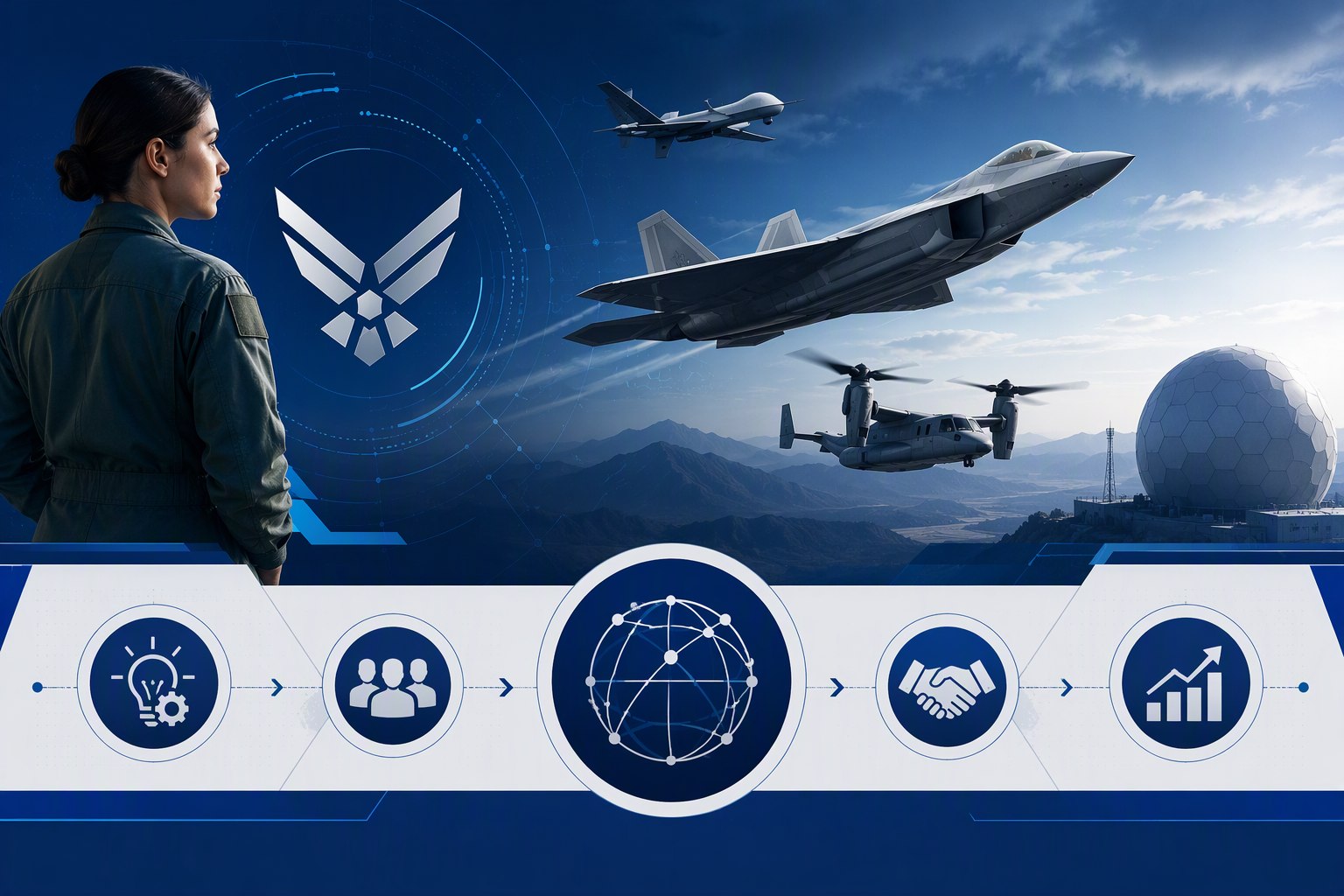
AI-generated illustration by SeoSorted for DefDex; not a photograph or verified market data.
AFWERX is a Department of the Air Force innovation organization that connects military problems with commercial technologies and funding pathways. It gives startups and nontraditional contractors a route into a market where opportunities are spread across solicitations, award systems, program offices and company disclosures.
We view AFWERX as a pipeline rather than a single grant program. Its activities can support early technical work, prototypes and transition efforts, but those stages reflect different levels of customer commitment.
When was AFWERX founded?
AFWERX emerged as part of the Department of the Air Force’s broader effort to engage commercial technology companies and accelerate innovation. Anyone researching its institutional history should verify dates against current primary government records, as the supplied program guidance focuses on active opportunities rather than the organization’s founding.
AFWERX also sits alongside other Department of War innovation front doors designed to connect companies with government customers.
What the AFWERX program does
AFWERX supports opportunity development, proposal evaluation, customer engagement and SBIR/STTR activity. A company may progress from an identified mission problem to feasibility work, prototyping and a possible acquisition route.
Those steps are not interchangeable. A funded study or prototype does not show that an operational organization has the budget or authority to purchase the product at scale.
Is AFWERX Part of AFRL? The Department of the Air Force Structure
AFWERX operates within the Department of the Air Force’s innovation environment. Public records may also identify Air Force Research Laboratory organizations in administrative, technical or contracting roles. We recommend checking the solicitation and award documents before assigning responsibility for a specific effort.
A useful relationship map distinguishes among:
- The organization administering the opportunity
- The military organization sponsoring the problem
- The contracting office making the award
- The operational customer testing or using the capability
- The budget owner responsible for possible follow-on procurement
AFWERX, AFRL and operational customers
The organization administering an award may not be the organization that eventually buys the technology. An operational command, program office or other mission organization could own the underlying requirement.
We therefore record the administrator, sponsor, customer, contracting office and transition owner separately. Combining them under “the Air Force” conceals acquisition and transition risks.
Why sponsorship is not procurement authority
Evaluators, end users, contracting personnel and budget owners can represent different organizations. A positive technical assessment or demonstration invitation indicates interest, but neither automatically creates procurement funding.
We place more weight on a named operational owner, documented requirement, available budget and executable contracting route. General support remains useful, but it is not the same as purchasing authority.
Who Is SpaceWERX, and How Does It Relate to AFWERX?
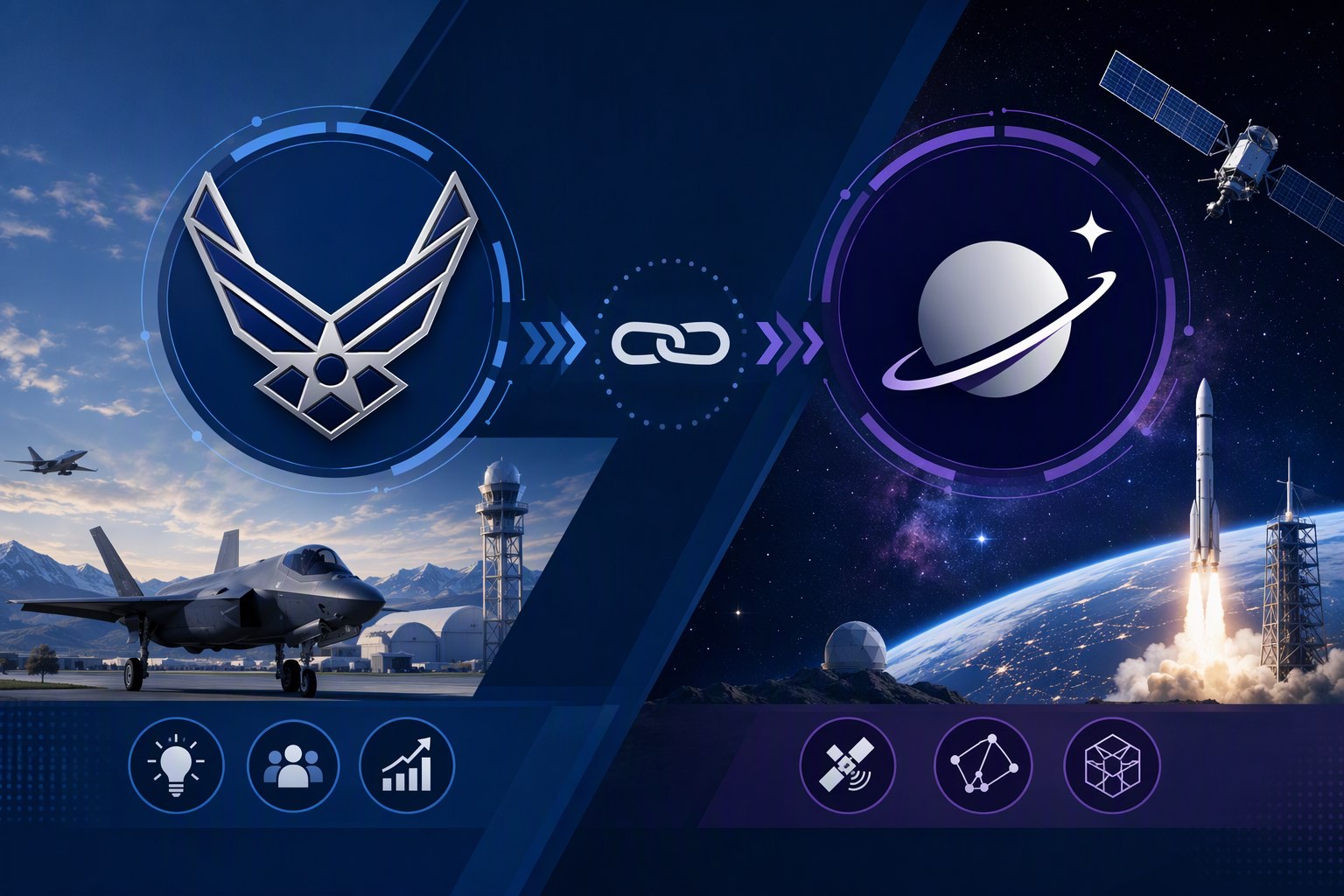
AI-generated illustration by SeoSorted for DefDex; not a photograph or verified market data.
SpaceWERX is the innovation arm of the U.S. Space Force. Its official materials state that it uses Small Business Innovation Research and Small Business Technology Transfer funding to cultivate and transition emerging technologies.
SpaceWERX is associated with the broader AFWERX innovation environment, but shared mechanisms do not mean identical customers or acquisition routes.
SpaceWERX and U.S. Space Force innovation
SpaceWERX publishes solicitations and engagement opportunities tied to Space Force priorities. Its materials reference SBIR and STTR, Phase I and Direct-to-Phase II opportunities, including topic-based releases.
For each opportunity, we look past the broad technology category and identify the mission sponsor, operational problem and likely transition office. Those details reveal more than the SpaceWERX label alone.
AFWERX versus SpaceWERX
AFWERX addresses Department of the Air Force innovation, while SpaceWERX focuses on U.S. Space Force priorities. Both may use SBIR/STTR structures, but they serve different mission portfolios.
We recommend classifying awards by end customer. Service attribution affects the competitive set, deployment environment, budget context and likely acquisition route.
AFWERX SBIR and STTR: Eligibility, Topics and Proposal Evaluation
AFWERX opportunities may use the federal SBIR or STTR programs. STTR includes a formal research-institution role, while specific eligibility and work-share requirements depend on current program rules and solicitation instructions.
Companies should review the active notice rather than rely on a generic checklist. Our SBIR and STTR guide explains the broader structure, but the official solicitation controls.
Open Topic versus Specific Topic solicitations
Open Topic opportunities allow companies to propose commercially developed technologies with defense relevance. That flexibility can improve access for nontraditional suppliers, although customer commitment may vary across the resulting portfolio.
Specific Topics describe a more explicit government problem or technical need. Clearer alignment can indicate demand, but selection still does not guarantee follow-on procurement.
Eligibility and customer evidence
A customer memorandum may show that a government contact recognizes the problem and supports evaluating a solution. It does not necessarily establish committed funding, contracting authority or program-office sponsorship.
The signatory’s role matters. We determine whether that person represents an end user, evaluator, budget owner or acquisition organization, then record the commitment actually made.
How proposals are evaluated and awards announced
AFWERX guidance states that applicants to Air Force or Space Force SBIR/STTR topics receive automated feedback with adjectival ratings. Proposals may be identified as selectable and funded or not selected.
Public announcements can omit important contract economics. We verify the funded amount, ceiling, options, performance period and any matching conditions wherever records permit.
AFWERX Funding Paths: Phase I, Phase II and Direct-to-Phase II
The funding path helps explain the work being purchased. It does not establish production demand on its own.
| Path | Practical interpretation | Evidence to examine |
|---|---|---|
| Phase I | Early feasibility work | Mission problem, technical approach and customer engagement |
| Phase II | Development or prototyping | Test scope, users, milestones and transition planning |
| Direct-to-Phase II | Entry into later-stage work based on prior feasibility | Previous technical evidence and current customer support |
| Transition mechanism | Additional support aimed at operational progress | Matching commitments, acquisition route and follow-on funding |
Contract records should separate ceiling value, current obligations, options and matching capital. Calling every figure “contract value” overstates traction.
Phase I: feasibility is not fielding
Phase I can indicate that an approach merits investigation. It does not prove that a deployable product exists or that a military customer plans to procure it.
We look for a defined mission problem, an engaged customer, measurable technical objectives and a plausible next step.
Phase II: prototype progress, not scaled procurement
Phase II may support development or testing against a defined scope. Stronger transition evidence includes named users, realistic test environments, a participating program office and identified funding.
A prototype announcement without those details tells us less than an award connected to a customer, budget and follow-on vehicle.
Direct-to-Phase II: when prior feasibility changes the path
Direct-to-Phase II allows an eligible effort to enter at a later stage when the required prior feasibility can be demonstrated. Current solicitation rules determine what evidence is sufficient.
The faster route does not remove transition risk. Operational testing, customer ownership and funded procurement still matter.
TACFI and STRATFI: Matching Funds and Transition Capital
TACFI and STRATFI are commonly discussed as transition-oriented mechanisms associated with SBIR/STTR efforts. Requirements and availability can change, so companies and analysts should rely on the applicable solicitation rather than assume a standard structure.
What TACFI is designed to fund
TACFI is intended to support progress beyond an initial prototype effort. When reviewing an opportunity, we examine customer documentation, matching sources, technical milestones and performance conditions.
Its value depends on the commitments behind it and the procurement route that may follow.
What STRATFI is designed to fund
STRATFI is also associated with technology transition and scaling. AFWERX guidance identifies it as part of the DAF SBIR/STTR program, but the exact terms must be confirmed in current documents.
We focus on funded obligations and executable milestones rather than headline potential.
How to evaluate matching-fund claims
We classify matching capital as committed, conditional or merely targeted. We also identify whether it comes from a government customer, another public organization or private investors.
Each source signals something different. Private investment may show financial conviction, while customer funding can provide stronger evidence of mission demand.
How to Track AFWERX Award Recipients, Values and Competitors
AFWERX intelligence is fragmented. A solicitation may appear in one system, an award in another and the transition outcome in a company announcement or later contract record.
At DefDex, we connect defense companies, opportunities and awards in one market-intelligence environment. This helps us follow entities and contract chains rather than rely on isolated announcements.
The fields that make an AFWERX award comparable
A normalized record should include the legal recipient, award date, phase, topic, customer, sponsor, contract identifier, funded amount, ceiling, options and period of performance.
Entity resolution matters because recipients may use trade names, subsidiaries or new names after a merger or rebrand.
Why press releases are insufficient
Press releases often compress customer interest, prototype scope, options and potential value into the word “contract.” That can make a pilot appear to be scaled procurement.
We cross-check the recipient, identifier, obligations, ceiling, sponsor and performance period. Potential follow-on value should remain separate from booked funding.
Finding competitors, partners and investable companies early
We group recipients by mission problem and technology, not marketing descriptions alone. This exposes direct competitors, complementary products and customer concentration.
Repeat engagement becomes more meaningful when it is accompanied by larger obligations, advanced testing or a defined acquisition office.
From AFWERX Prototype to Operational Adoption
Transition is more informative than award count. Awards show access and activity; follow-on funding, procurement authority and fielded capabilities provide stronger evidence of adoption.
Signals of credible Air Force or Space Force demand
Useful signals include a named customer, validated requirement, test plan, budget owner, contracting route and deployment schedule. Demonstrations and memoranda remain intermediate evidence unless funding and acquisition authority accompany them.
Common transition routes after AFWERX
Possible routes include follow-on SBIR work, transition funding, program-office contracts, other authorized agreements and production-oriented follow-ons. No single route proves success; the evidence must show sustained, funded use.
A diligence framework for analysts and investors
We assess customer ownership, mission relevance, technical maturity, competition, transition funding, procurement authority and fielding evidence. Every score should be tied to a document or attributable disclosure.
AFWERX participation is one diligence signal. It does not replace analysis of revenue quality, capitalization, customer concentration or contract economics.
AFWERX Questions for Companies, Analysts and Investors
Before treating an award as meaningful traction, we ask who owns the requirement, what funding is currently obligated, which office can make a follow-on purchase and whether the technology has been tested by operational users.
We also distinguish an initial recipient from its parent company and track modifications over time. This prevents double counting and shows whether government commitment is growing.
FAQ
Does an AFWERX Phase II award prove product-market fit?
No. It can demonstrate funded development or prototyping, but stronger evidence includes a named operational customer, follow-on funding, acquisition authority and field deployment.
What is the difference between an award ceiling and obligated funding?
The ceiling is the maximum potential value under the instrument’s terms. Obligated funding is money currently committed. Options and potential matching funds should not be counted as current revenue.
Are TACFI and STRATFI separate SBIR phases?
They are better understood as transition-oriented mechanisms rather than standard numbered phases. Their current requirements should be verified in the applicable solicitation.
How can we identify successful AFWERX companies?
We track follow-on obligations, repeat customer engagement, operational testing, procurement authority and fielding evidence. Award totals and press coverage are weak measures on their own.
Does an AFWERX customer memorandum guarantee a contract?
No. It may document interest or mission relevance, but it does not necessarily commit procurement funding. Its value depends on the signatory’s role, authority and stated commitment.
Map the AFWERX Pipeline
Use DefDex to examine the companies, awards and opportunities behind AFWERX announcements—and identify which recipients are moving from prototype funding toward funded defense adoption.