
Department of War office
Defense Innovation Unit
The Defense Innovation Unit works on operational problems the joint force identifies.
- Part ofU.S. Department of War
About
The Defense Innovation Unit works on operational problems the joint force identifies. It brings commercial technology into the department's innovation plans. The department also calls the office the War Department Innovation Unit. The joint force identifies the problems, and the office looks for commercial technology that can address them.
Identity and Data Scope
Defense Innovation Unit is listed as a department of war office within U.S. Department of War.
No prime-contract activity is published for this body in this build. This does not establish that Defense Innovation Unit has no budget, makes no purchases or has never awarded a contract.
The baseline begins in FY2008. This body has only catalog totals in this build, not an all-recipient summary; omitted awards could raise or lower its obligations. These are prime-contract obligations, not budget authority, outlays or announced ceilings. Subcontracts and assistance are not part of this prime-contract view. Program lists identify reported acquisition codes; an absent program link does not mean the body has no programs.
Verify identifiers and award records on USAspending; use the baseline and promotion rules to distinguish totals from the awards served individually.
Guide · by DefDex · reviewed
What is the Defense Innovation Unit?
The Defense Innovation Unit connects commercial technology companies with Department of Defense requirements. A prototype award, however, does not prove lasting adoption. We track stronger signals such as obligated funding, transition sponsors, production orders, deliveries, operational fielding, and repeat demand.
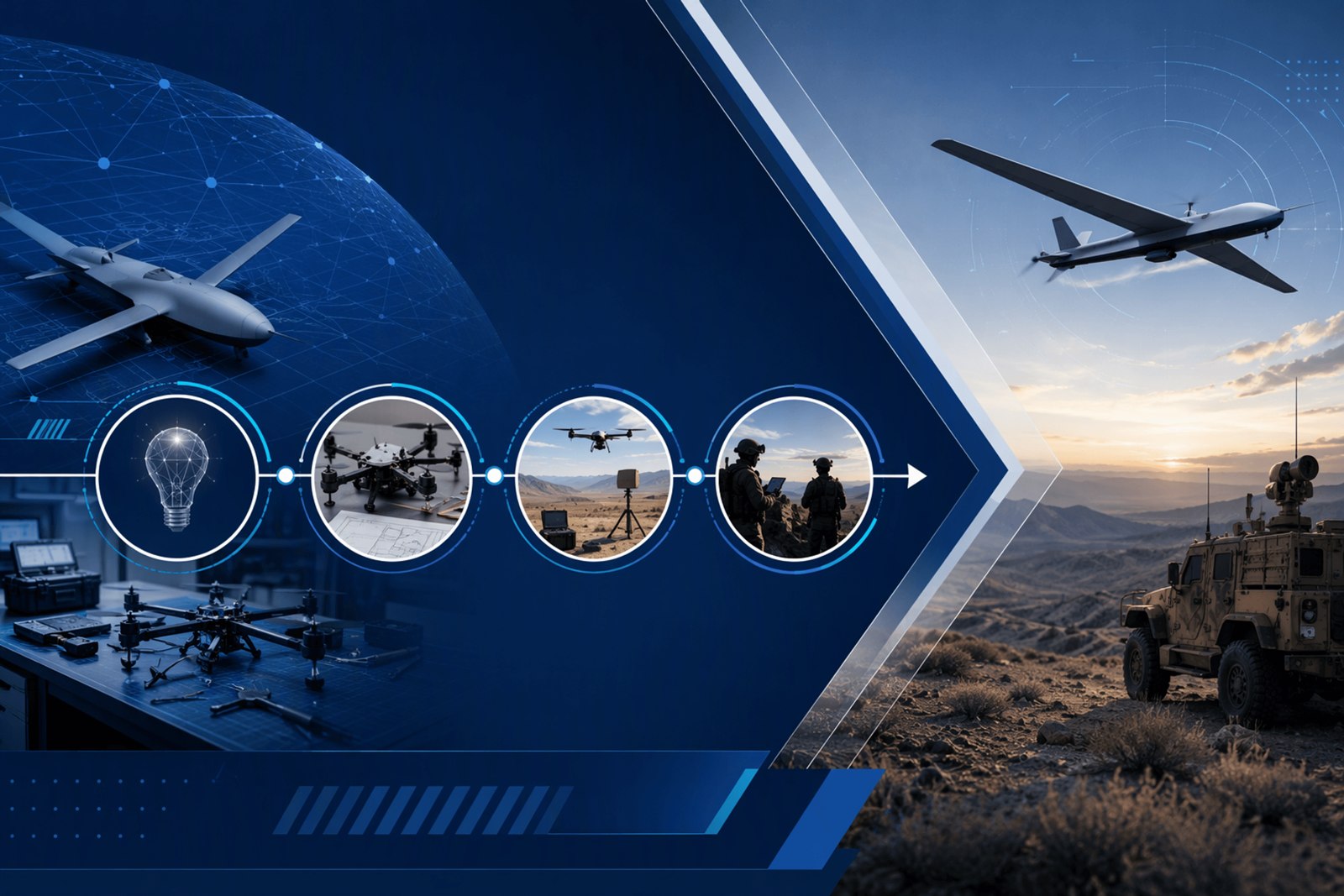
AI-generated illustration by SeoSorted for DefDex; not a photograph or verified market data.
The guide's review date is separate from the contract data cutoff shown with the data.
News20
- Nov 16, 2026NewsNaval NewsDIU Awards Saronic Contract to Deliver Autonomous Low Profile Vessel for USMC Contested Logistics
- Oct 6, 2026NewsDefenseScoopBonnie Evangelista to lead drone buying on Pentagon's new DRPM-UxS team
- Oct 1, 2026News (high significance)Defence Industry EuropeTiberius Aerospace announces $500 million contract for U.S.-developed Sceptre munition to expand allied artillery production
- Oct 1, 2026CompanyPR NewswireVatn Systems Wins Defense Innovation Unit's Mine Countermeasure Modernization Prize Challenge
- Sep 29, 2026NewsBreaking DefenseDIU, Space Force team up to kick-start buys of commercial sats for monitoring GEO
TL;DR
The Defense Innovation Unit connects commercial technology companies with Department of Defense requirements. A prototype award, however, does not prove lasting adoption. We track stronger signals such as obligated funding, transition sponsors, production orders, deliveries, operational fielding, and repeat demand.
Defense Innovation Unit: Track the Full Path From Opportunity to Fielded Capability
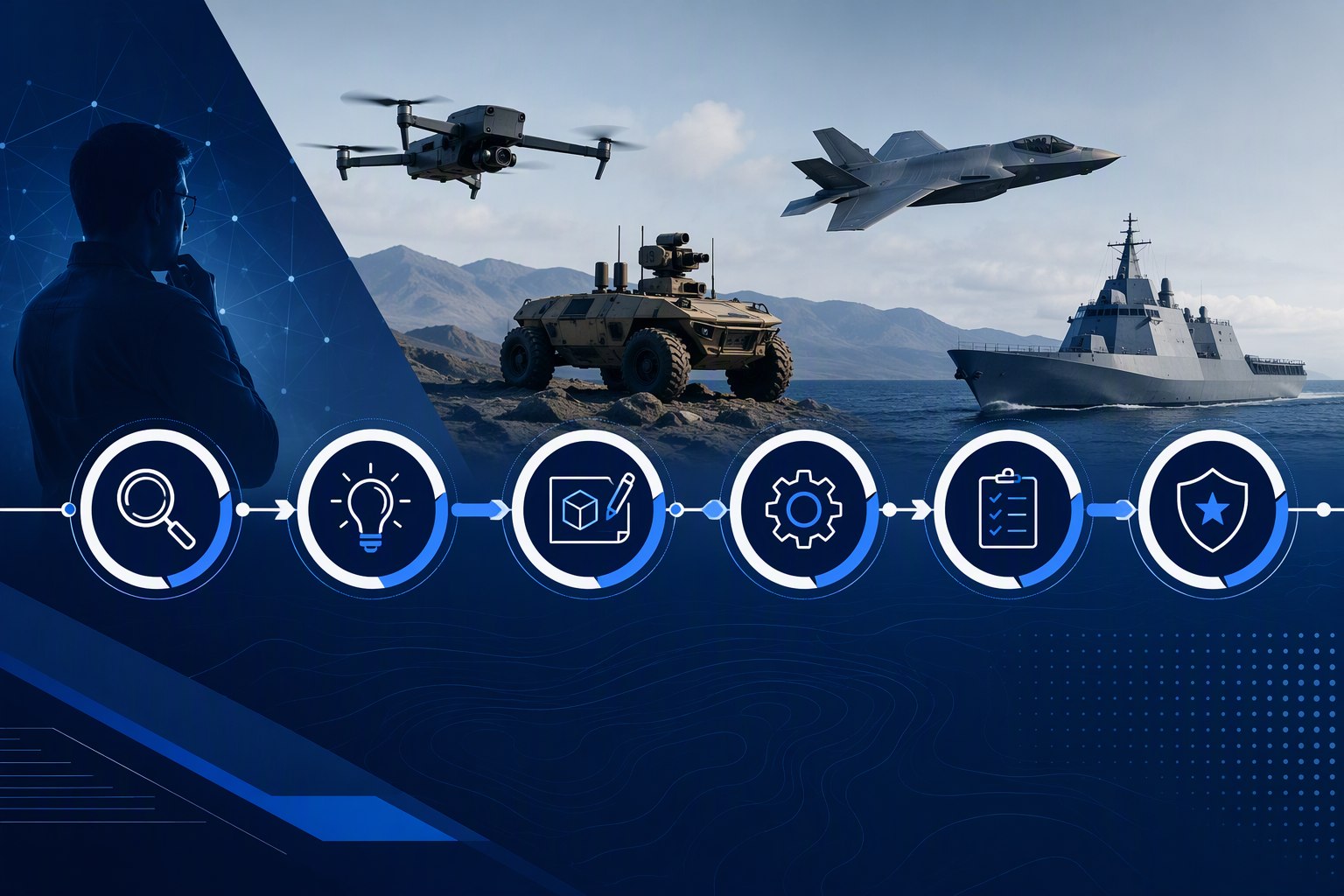
AI-generated illustration by SeoSorted for DefDex; not a photograph or verified market data.
The Defense Innovation Unit is a Department of Defense organization that helps military customers evaluate and adopt commercial technology. It gives companies, including those unfamiliar with conventional defense procurement, another route to address national security requirements.
For contractors, investors, and analysts, finding an opportunity is only the start. We also need to identify awardees, verify contract values, trace funding, and determine whether a prototype reached production. Public announcements rarely show that entire chain.
What is the Defense Innovation Unit?
Established in 2015, DIU focuses on accelerating military adoption of commercial technology. Its work spans fields such as artificial intelligence, autonomous systems, information technology, space, and human systems.
DIU is an acquisition and adoption pathway. It is not a venture fund, military service, prime contractor, or replacement for the program offices that sustain fielded systems.
Companies should also compare DIU with other Department of War front doors, including AFWERX and related organizations. Each channel involves different customers, processes, and transition risks.
Why award announcements do not tell the full story
A prototype award may fund a limited evaluation without producing recurring revenue or an enduring military requirement. We look for stronger evidence:
- Obligated production funding
- Exercised orders or options
- Identified transition sponsors
- Delivered production quantities
- Operational fielding
- Repeat demand
The Government Accountability Office has urged DIU to develop better metrics for whether supported products help military users. That reflects a sound standard: operational utility and production matter more than announcement volume.
How the Defense Innovation Unit Works With the Department of Defense
DIU works with military departments, combatant commands, acquisition organizations, contracting offices, program teams, and operational users. These groups may define the problem, fund a prototype, evaluate performance, or manage transition.
DIU can accelerate access to commercial technology, but testing, cybersecurity, integration, funding, manufacturing, training, and sustainment still shape adoption. Our market guide to the U.S. Department of Defense explains how buyers, budgets, programs, and contractors interact.
Who owns the requirement, contract, and transition?
We map five roles separately:
- Operational customer: Defines the mission need.
- Contracting office: Executes and administers the agreement.
- Program office: Manages integration and lifecycle requirements.
- Testing organization: Evaluates performance, security, or suitability.
- Transition partner: Funds or manages production and deployment.
A technically successful prototype can still stall if no organization owns its transition.
DIU 3.0 and department-wide adoption
DIU 3.0 emphasizes moving commercial technology beyond prototypes and into production. We therefore assess production obligations, budget alignment, repeat customers, deliveries, and fielding evidence rather than relying on prototype speed alone.
The Commercial Solutions Opening Process, Step by Step

AI-generated illustration by SeoSorted for DefDex; not a photograph or verified market data.
DIU launched the Commercial Solutions Opening process with Army Contracting Command–New Jersey in 2016. It can progress from a published problem statement through solution briefs, pitches, evaluation, negotiation, prototype work, testing, and possible transition.
1. Problem statement and solution brief
A strong submission starts with an existing commercial capability that fits the stated mission problem. The brief should connect performance evidence to that requirement while explaining deployment assumptions, integration dependencies, delivery schedules, and pricing.
Speculative research is unlikely to fit when the customer expects deployable technology.
2. Pitch, evaluation, and due diligence
Evaluation may consider technical merit, commercial viability, company capacity, security, supply-chain integrity, and suitability for military use. Reviewers may also examine whether the vendor can manufacture, support, and update its product.
A successful pitch is not an award. Scope, funding, intellectual property, testing, and customer approvals may remain unresolved.
3. Agreement, prototype, and transition planning
Agreement negotiations can cover milestones, payments, acceptance criteria, data rights, testing responsibilities, delivery conditions, and security obligations.
We recommend beginning transition planning before prototype work ends. Teams need to identify the future buyer, funding source, contracting path, production capacity, and integration requirements early.
Other Transaction Prototype Awards and Follow-On Production
DIU uses Other Transaction authority for prototype projects. This approach can accommodate commercially oriented terms and flexible structures, but it does not guarantee production.
A follow-on production pathway may become available when the relevant legal and agreement requirements are satisfied. It should not be presented as automatic authority, automatic funding, or a guaranteed order.
What an OT prototype award proves—and what it does not
An OT prototype award shows that the government selected and funded a defined effort. By itself, it does not prove production readiness, broad deployment, recurring revenue, operational acceptance, or long-term sustainment demand.
Signals that follow-on production is real
We look for obligated funding, quantities, exercised options, delivery orders, program sponsors, budget support, and deployment evidence.
Analysts should distinguish among a contract’s maximum ceiling, potential value, publicly announced value, and actual obligations. Treating these figures as interchangeable can make a limited prototype appear to be a production program.
Who Can Compete for Defense Innovation Unit Opportunities?
Startups, established technology companies, nontraditional defense contractors, and teaming partners may pursue DIU opportunities. Competitive readiness still depends on product maturity, customer evidence, manufacturing capacity, cybersecurity, supply-chain integrity, and contracting discipline.
A bid/no-bid checklist for DIU problem statements
Before committing resources, we recommend confirming that:
- The product fits without fundamental redesign.
- Deployment is feasible in the intended environment.
- Cybersecurity and accreditation have a credible path.
- The team can support testing.
- Pricing covers the required work.
- Manufacturing can scale.
- A specific organization could fund transition.
Without a plausible production buyer, the opportunity may remain a pilot rather than become a market.
Teaming, subcontracting, and competitive positioning
An integrator, manufacturer, prime contractor, or specialist partner can close gaps in installation, compliance, production, or sustainment. Competitive research should also cover rivals’ capabilities, previous awards, customers, investors, partners, and production history.
DIU Portfolios and Priority Technology Areas
DIU works across commercial technology areas such as artificial intelligence, autonomous systems, information technology, space, and human systems. Portfolio labels aid discovery, but they do not establish who will fund or deploy a solution.
How to evaluate a technology area
We assess:
- Requirement urgency
- Budget visibility
- Customer concentration
- Testing burden
- Integration complexity
- Incumbent strength
- Production and sustainment needs
Strategic attention can indicate demand, but budgets, obligations, orders, and deliveries provide firmer evidence.
Commercial promise versus military readiness
Military use may require ruggedization, secure communications, cybersecurity controls, interoperability, training, maintenance, and long-term support. These requirements can change costs and schedules substantially.
Commercial novelty alone does not guarantee military readiness or a lower lifecycle cost.
How to Measure Prototype-to-Production Success
We evaluate whether a technology progresses through a verifiable chain:
- Public announcement
- Signed award
- Obligated funding
- Completed prototype
- Follow-on action
- Production delivery
- Operational fielding
- Repeat demand
Any claimed transition rate should define its denominator, time window, meaning of “transition,” and evidence standard.
A production-focused DIU scorecard
A practical scorecard tracks prototype obligations, completion status, follow-on value, ordered quantities, deliveries, transition sponsors, funding sources, fielding evidence, and time to production.
At company level, we also examine repeat awards, customer diversity, manufacturing expansion, and dependence on a single prototype customer.
Why promising prototypes stall
Frequent obstacles include unclear requirements ownership, missing transition funding, testing delays, security accreditation, integration problems, supply-chain constraints, and weak program sponsorship.
Fast prototype awards cannot compensate for the absence of a funded production owner.
How to Track DIU Opportunities, Awardees, Investors, and Competitors With DefDex
Research should connect problem statements with companies, prototype awards, contract values, mission partners, investors, follow-on actions, and competitors.
DefDex maps the arsenal of democracy by reconciling records spread across government pages, contract data, company disclosures, budget documents, and investment announcements.
Workflow for defense business development teams
Our recommended workflow is to monitor relevant problem statements, identify the requirement owner, map contracting and transition stakeholders, review previous vendors, locate potential funding pathways, and build the capture plan before submissions close.
Workflow for investors and corporate development teams
Investors should compare announcement volume with obligations, follow-on awards, customer diversity, and production evidence. Diligence can also examine financing, acquisitions, leadership, manufacturing plans, and reliance on prototype revenue.
Red flags DefDex helps surface
Warning signs include large ceilings with limited obligations, repeated pilots without production actions, unnamed transition partners, no visible budget pathway, and product names that cannot be reconciled with acquisition records.
National Security Innovation Capital, OnRamp Hubs, and the Wider DIU Ecosystem
The wider ecosystem can provide capital support, regional connections, acquisition access, prototype opportunities, and procurement pathways. We treat these as separate events because each represents a different level of government commitment.
Capital is not the same as a customer
Financing may strengthen a company’s development or manufacturing capacity. It does not prove recurring defense revenue. We look for subsequent obligations, contracts, deliveries, and repeat purchases.
Regional access is not the same as procurement access
Regional connections may help companies understand defense organizations and meet potential customers. Formal requirements, evaluations, budgets, and contracting decisions still determine whether a capability is purchased.
FAQ
What is the Defense Innovation Unit?
DIU is a Department of Defense organization that accelerates military adoption of commercial technology and supports the national security innovation base.
Is DIU part of the U.S. Department of Defense?
Yes. DIU is part of the Department of Defense, although it is not a military service or necessarily the office responsible for sustaining a fielded system.
Does a DIU prototype award lead automatically to production?
No. Production requires successful execution, applicable authority, funding, customer acceptance, manufacturing capacity, and an organization prepared to own the capability.
How can companies find DIU opportunities and award data?
Companies can start with official DIU problem statements and notices, then connect those records with contract data, customer information, company disclosures, and follow-on actions.
What is the average salary at the Defense Innovation Unit?
There is no reliable single average for every DIU role. Compensation varies by position, location, seniority, employment type, and pay framework. Official vacancy announcements provide the relevant ranges.
Map the Full DIU Market
Use DefDex to research DIU opportunities, awardees, customers, investors, competitors, contract values, and prototype-to-production signals in one connected defense market intelligence database.